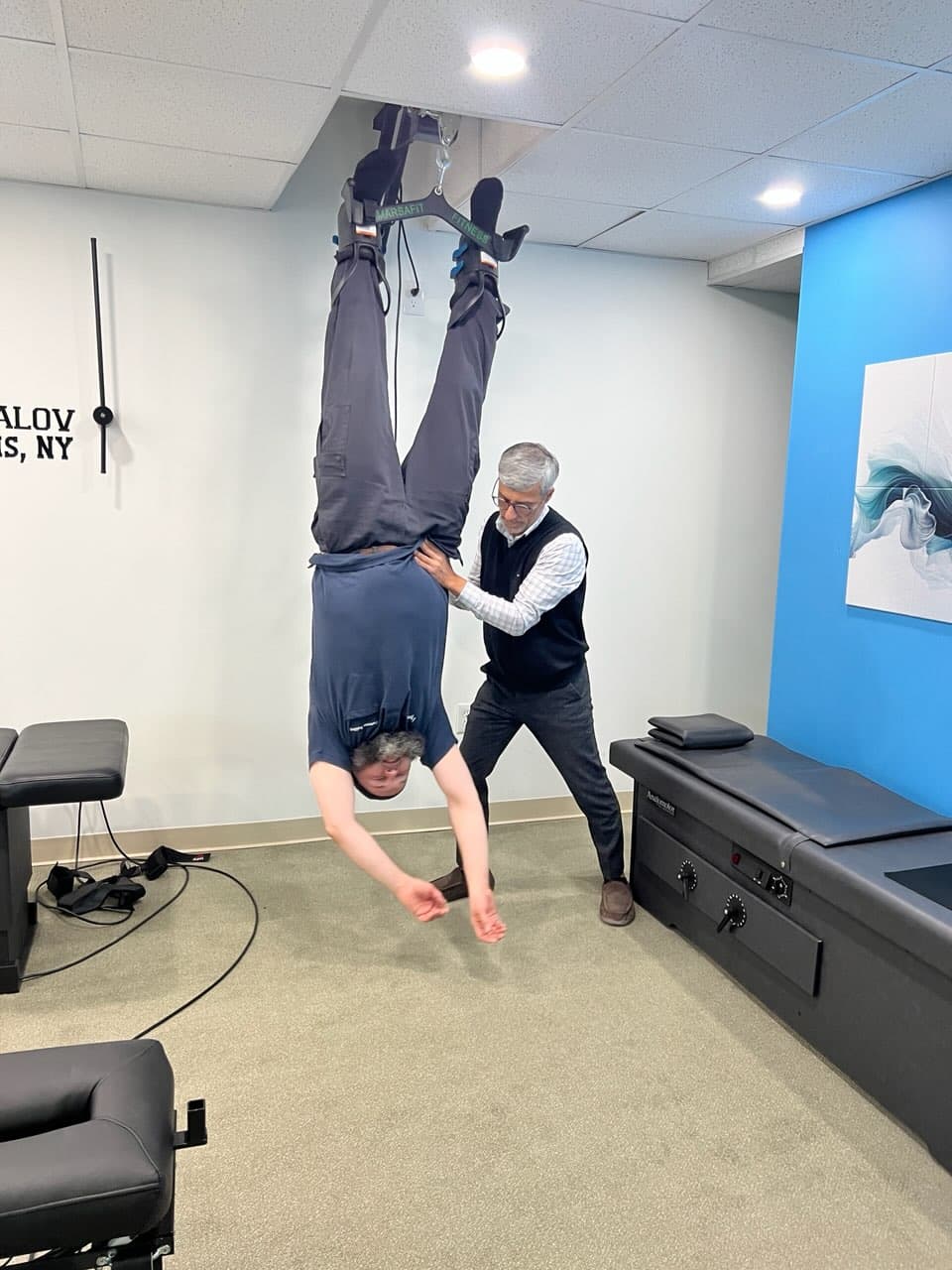
Inversion traction uses gravity to decompress the spine by tilting the body upside down or at an angle. It can reduce pressure on discs and nerves and is commonly used alongside chiropractic care for lower back pain and sciatica.
How Inversion Works
When you invert, the weight of your torso and abdomen no longer compresses the spine from above. This can create space between vertebrae, ease disc pressure, and reduce tension on muscles and ligaments. Blood flow and fluid exchange in the spine may also improve. Inversion tables allow you to control the angle (full invert or partial) and duration, so therapy can be adjusted to your comfort and condition.
Benefits for the Lower Back and Sciatica
Many patients use inversion to address chronic low back pain, bulging discs, and sciatica. By reducing compression on the lumbar spine and nerve roots, symptoms like leg pain, numbness, and tingling may decrease. It can also complement in-office spinal decompression and adjustments by maintaining gains between visits.
Safety and Contraindications
Inversion is not safe for everyone. It can raise eye pressure and blood pressure, so it is generally avoided in glaucoma, hypertension, heart disease, and stroke history. Pregnancy, recent surgery, and certain bone or joint conditions also warrant caution. Always get clearance from your chiropractor or doctor before starting inversion therapy.
Integrating Inversion With Chiropractic Care
Used under professional guidance, inversion can be part of a comprehensive plan that includes adjustments, soft-tissue work, and home exercises. Your provider can recommend angle, duration, and frequency so you get the benefits without overdoing it.